

Table Of Content
Rice Water for Hair Shine and Growth: The Ancient Secret for Glossy Locks
If you have been scrolling through beauty feeds recently, you have likely swiped past videos of glossy, floor-length hair attributed to one simple ingredient: rice water. While it may seem like a viral trend, using rice water for hair is actually an ancient beauty ritual that dates back to the Heian period in Japan, where court ladies were known for their beautiful, long hair, called suberakashi.
Why is this humble kitchen staple such a powerhouse for hair health? It is packed with vitamins, amino acids, and minerals that can transform dull, brittle strands into a mane of strength and shine. In this guide, we will explore exactly how to make and use rice water to achieve the hair of your dreams—naturally.
Why Rice Water Works for Hair
Rice water is the starchy water left over after soaking or cooking rice. It is not just plain water; it is a nutrient-dense elixir. Here is why your hair loves it:
- Inositol: A carbohydrate that repairs damaged hair from the inside out and protects it from future damage. It stays inside the hair fiber even after rinsing!
- Amino Acids: The building blocks of protein, essential for strengthening hair roots and thickening individual strands.
- Vitamins B and E: These vitamins nourish the scalp, improve blood circulation, and add a heavy dose of shine and softness.
- Antioxidants: Help combat oxidative stress on the scalp, which can lead to premature graying and hair fall.
Ingredients Checklist
You do not need fancy equipment—just simple items from your pantry:
- ½ cup of uncooked rice (white, brown, or jasmine rice all work well)
- 2–3 cups of water
- Jar or bowl with a lid
- Essential oils (optional, for scent—lavender or rosemary are great options)
- Spray bottle (for easy application)
Step-by-Step Preparation
Method 1: The Soaking Method (Quickest)
- Rinse: Thoroughly rinse the ½ cup of rice to remove any dirt or impurities.
- Soak: Place the clean rice in a bowl and add 2–3 cups of water.
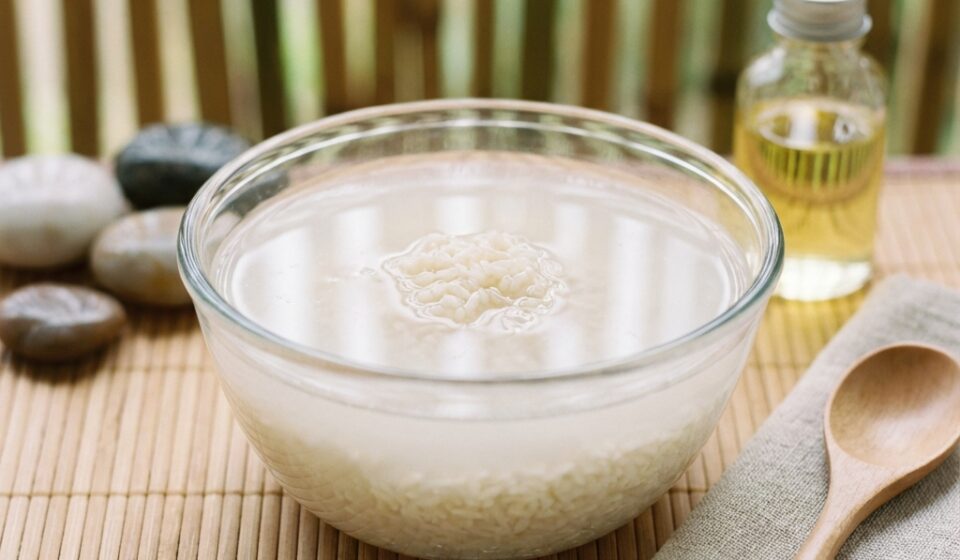
- Wait: Let it sit for 30 minutes. You will see the water turn milky and cloudy—that is the nutrients seeping out.
- Strain: Strain the rice (cook it for dinner!) and pour the water into a fresh bowl or jar.
Method 2: The Fermented Method (Most Potent)
Fermentation lowers the pH of the rice water, bringing it closer to your hair’s natural pH, and increases the nutrient levels.
- Follow the soaking steps above, but instead of using it immediately, leave the strained water in a jar at room temperature for 12–24 hours.
- Once it smells slightly sour, stop the fermentation by putting it in the fridge.
- Dilute with a little plain water before using, as it is very potent!
How to Apply Rice Water to Hair
For the best results, use rice water as a post-shampoo rinse or a pre-poo treatment.
- Shampoo as Usual: Cleanse your scalp with a mild sulfate-free shampoo to remove buildup.
- Apply: Pour the rice water onto your hair, starting from the scalp and working your way down to the ends. Massage it gently into your scalp for 5 minutes. This stimulates blood flow and helps absorption.
- Rest: Leave it on for 15–20 minutes. You can put on a shower cap to prevent dripping.
- Rinse: Rinse thoroughly with cool water. You generally do not need conditioner afterwards as rice water improves manageability, but if your hair is very dry, apply a light conditioner on the tips.
Frequency of Use
1–2 times a week.
Rice water is a protein treatment. Using it too often—like every day—can lead to “protein overload,” making your hair feel stiff and straw-like. Start with once a week and see how your hair responds.
Benefits of Rice Water
- Increases Shine: Smooths the hair cuticle for light-reflecting gloss.
- Detangles: Makes hair slippery and easier to comb through, reducing breakage.
- Promotes Growth: Nourishes follicles and creates a healthy scalp environment.
- Strengthens: Reduces split ends and hair fall by reinforcing the hair shaft.
Who Should Avoid It?
- Low Porosity Hair: If your hair struggles to absorb moisture (products sit on top), be careful. Protein treatments can build up quickly. Use the fermented version and dilute it well, or limit use to twice a month.
- Protein-Sensitive Hair: If your hair feels dry and brittle after use, you may strictly need moisture, not protein. Skip rice water and try aloe vera instead.
Pro Beauty Tips
- Add Orange Peels: Fermented rice water can smell a bit pungent. Add dried orange peels or a few drops of lavender essential oil to the water while it ferments for a fresh citrus scent.
- Consistency is Key: You might see shine after one wash, but real growth and strengthening results typically appear after 4–6 weeks of consistent use.
FAQs
Q: Can I leave rice water in my hair overnight?
A: It is not recommended. Rice water is high in protein and starch. Leaving it on for too long can cause buildup, dryness, and breakage. 20 minutes is the sweet spot.
Q: Which rice is best for rice water?
A: Organic white rice is popular because it releases starch quickly, but brown rice and jasmine rice are also excellent. Use whatever you have, as long as it is rinsed well.
Q: Does rice water smell bad?
A: Plain soaked rice water has a mild, starchy scent. Fermented rice water has a sour smell. Using essential oils or rinsing thoroughly usually eliminates any odor.
Q: Can it cure baldness?
A: While it strengthens existing hair and promotes a healthy scalp for new growth, it is not a cure for medical conditions like alopecia or male pattern baldness.
Conclusion
Rice water is one of the most affordable and effective natural hair treatments available. It bridges the gap between ancient wisdom and modern hair goals, offering a chemical-free path to stronger, shinier locks. Whether you are trying to grow out a bob or simply want to add some life to dull strands, this simple kitchen remedy is worth a try.
Always conduct a patch test before trying any new natural remedy to ensure you do not have an allergic reaction.